

Let’s explore some examples of the most common words used to talk about the order and relationships among different events in time. It’s important to be able to talk about now, later, earlier, before, and after in Portuguese. Current Time is the term we use to refer to the present. Before or After We use […]

Seasons of the Year
March 26, 2017
The seasons of the year are called in Portuguese. Their names have Latin origins, which by now you may have noticed is very common in Portuguese. (Don’t you wish you had paid more attention to Latin in school? 😜 ) Just like English, the seasons of the year are not capitalized in Portuguese.
Portuguese Holidays
March 26, 2017
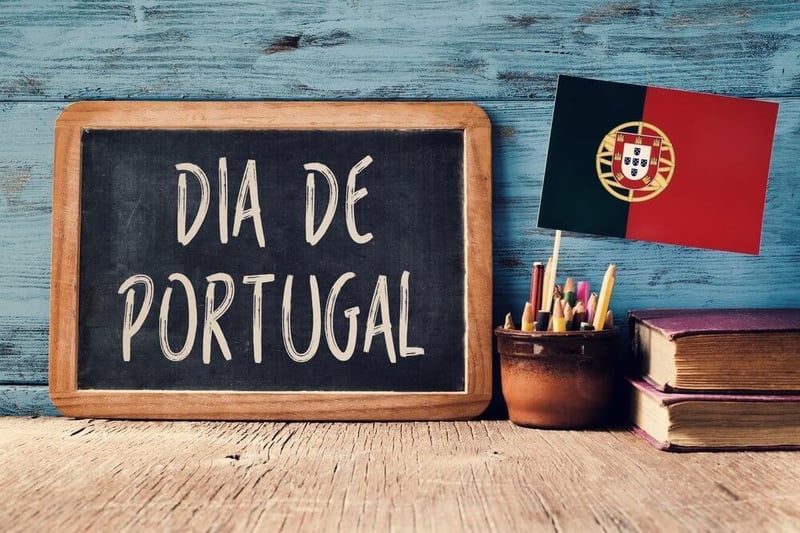
The Portuguese calendar has several holidays and holiday periods throughout the year. Holiday can have two meanings in Portuguese: – A public holiday, or day to celebrate something of specific cultural or religious importance at a local or national level. – A planned period of time off work or school. Férias are often scheduled around […]

Months of the Year
March 26, 2017
As you saw in previous lessons, the days of the week are very different from other languages. But as luck would have it, the names of in Portuguese are quite similar to other languages, since we all use the same Gregorian calendar. All the names share common roots in Roman culture.

Hours and Telling Time
March 26, 2017
Let’s learn how to tell time in Portuguese! That way you’ll know whether you are , , or . 🙂 If you don’t have a phone or watch with you, you could ask someone , i.e. “What hours are there?” A more formal/polite option is: , i.e. “Do you have hours that you tell me?” The […]

European Portuguese Greetings
March 26, 2017
Let’s start with the basics! One of the simplest Portuguese greetings is and one of the simplest ways to say goodbye is , or the slightly more formal . However, it’s also very common to say hello or goodbye with a more specific greeting based on what time of day it is. Portuguese Greetings Throughout […]

Days of the Week
March 26, 2017
In Portuguese, the naming of does not take inspiration from the planets and gods, as is the case for many other languages. Instead, they are simply numbered. The origin of the names of the days of the week in Portuguese The numbering of each weekday in Portuguese might have to do with ancient Easter celebrations, […]

Combining "A" With Demonstratives
February 27, 2017
As previously mentioned, the preposition can be combined with the articles o, a, os, and as to become ao, à, aos, and às. As far as demonstratives are concerned, a can only form contractions with aquele(s), aquela(s), and aquilo. A + Variable Demonstratives a + aquele = a + aqueles = a + aquela = […]
The Preposition "A"
February 27, 2017
A is a very important and versatile Portuguese preposition. It can correspond to many different English words, depending on the context. For example: – i.e. “From here to a week” – Within the time frame from now until a week from now More often than not, it means “to”, but it’s important not to get […]

Combining "Em" with Demonstratives
February 27, 2017
The preposition can be combined with variable and invariable demonstratives to form a number of very useful contractions. Remember that all the same rules for demonstratives remain valid when they appear in the following contractions. Em + Variable Demonstratives Relative Position Demonstrative Contraction Near the speaker: Near the listener: Away from both: These contractions can be used […]

Combining "De" with Demonstratives
February 27, 2017
You learned in The Preposition “De” (from the first Prepositions unit) that de has several different meanings and can be joined together (contracted) with: articles (do, da, dos, das), and pronouns (dele, dela, deles, delas) De + Variable Demonstratives Another very common combination is with demonstratives. Let’s look at the contractions formed by combining with variable demonstratives: […]

Digging Deeper into Prepositions
February 27, 2017
You have learned that prepositions are usually small, but important, words that usually come before a noun to show how it relates to other elements in the sentence. An important part of mastering European Portuguese is not only learning the meaning of each of these prepositions, but also the nuances of when each one should […]
Translator
Hide
0/255