


Yes/No Questions in Portuguese There are a number of different ways to form questions in Portuguese. We’ll start with those for which the answers are either affirmative or negative. These are the easiest Portuguese questions to ask because very few changes have to be made to turn a statement into a question. 1. Add a […]

Saying No
May 19, 2020
The Basics: No & Not This is how to say no in Portuguese: The simplest way to make a sentence negative in Portuguese is just to place the word before the verb. This is the Portuguese equivalent of adding “no” or “not” to a sentence in English. Examples: Não is also used at the beginning […]
Learn Portuguese by Cooking
May 17, 2020
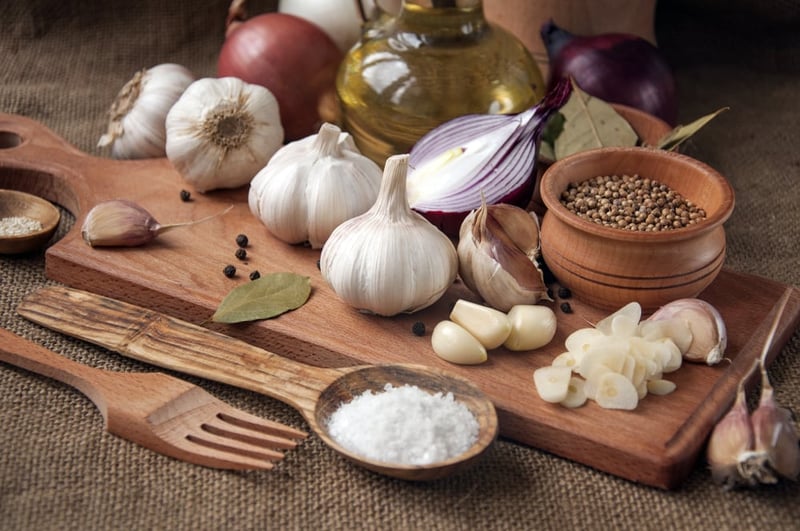
How about a lesson that ends in a tasty reward? For all you omnivores out there, let’s explore some vocabulary in context for different types of meat, vegetables, and other ingredients with these family contributed by one of our team members and his mother. Thanks Eduardo and Fernanda! 🙌 Learn the vocabulary in the ingredients […]

Emphasis and Clarity with Tonic Pronouns
May 5, 2020
Now we’ll look at some ways to add emphasis and clarity when using tonic pronouns in European Portuguese. In practice, the context will usually be enough to resolve any confusion, but it’s important to know how to make yourself clear. Adding Próprio or Mesmo When using a tonic pronoun reflexively (meaning it refers back to […]


Introduction to Tonic Pronouns
May 5, 2020
We’ve been using subject pronouns for a while (eu, tu, ela, etc.), but there are also a couple other types of personal pronouns you should know about: clitic pronouns – These go with verbs and will be covered in-depth later. tonic pronouns – These go with prepositions and they are our current focus. Different Types […]

Past Participles & Auxiliary Verbs
April 27, 2020
In this lesson we’re going to tackle past participles in Portuguese, i.e. So what is a past participle? A past participle is a verb form that can… function as an adjective – combine with the past tense of ser to use passive voice – combine with other auxiliary verbs (such as ter) to form different […]

Double Past Participles
April 26, 2020
In this lesson, we’ll have a look at . ‘Double’ here means that some verbs can take the form of either a regular or an irregular participle, depending on the auxiliary verb being used with them. Remember those verbs we marked off with an asterisk in the Irregular Participles learning note? They were , , […]

Irregular Past Participles
April 26, 2020
In this lesson, we’ll have a look at in Portuguese, i.e. past participles which behave in a unique and unpredictable way, instead of following the typical rules. Let’s see an example: If you are fresh off the previous lesson, perhaps you expected the past participle of to follow the rule for -IR verbs, and be […]

Regular Past Participles
April 26, 2020
In Portuguese, there are three types of past participles: , , and In this lesson, we’ll have a look at regular past participles, that is to say, past participles which behave in a predictable way. These participles depend on the verb’s ending, i.e. they have a specific ending depending on whether they’re the past participle […]

Idiomatic Expressions 2
April 13, 2020
In this Learning Note we’re going to show you a few more Portuguese idioms. This expression literally means “you’re a head of spoiled garlic”, which means you are not very bright. Although originally meant for people who are easily distracted or forgetful, it has a become an endearing way of calling someone dumb. In the […]

Irregular Verbs in the Simple Past
April 13, 2020
You’ve learned about irregular verbs and how to conjugate some of them in the present tense. If they’re irregular in the present, they’re usually irregular in other tenses too. There are no consistent rules to follow for this category, so the only way to learn the different conjugations is to study each one and practice, […]
Translator
Hide
0/255