


Time for a Portuguese vocabulary boost! If you remember the Things 1 unit, we learned the names for a variety of common objects, such as writing materials and containers. This time, we’re focusing on other objects you find inside the house, or outside in nature, as well as things related to money, electricity, and more. […]

Talking About the Weather in Portuguese
February 21, 2024
It’s time to talk about the weather in European Portuguese! This is everyone’s favourite topic of conversation, right? Well, maybe not. But hey, it’s a good starting point, especially if you don’t know someone well, or you don’t have much else in common. Portuguese Weather Vocabulary The word for weather is the same as the […]

Spanish vs. Portuguese
November 8, 2023
Whether you’re a native Spanish speaker, or you just took a few years of Spanish in school, you may be curious about the similarities and differences between Spanish and Portuguese. Are 🇵🇹Portuguese and 🇪🇸Spanish Basically the Same? No. First, let’s clear one thing up: Portuguese and Spanish are not just dialects of the same language. […]

Com Licença? Desculpe? Perdão?
September 15, 2023
We often get asked about how to say sorry and excuse me in Portuguese. Is there a difference between Com licença and Desculpe? What about Sinto muito? Lamento? Perdão? With so many options that have similar translations, it’s important to take context and cultural norms into account. In this Learning Note, we’ll cover which phrase(s) […]

Compound Tenses in the Subjunctive Mood
August 21, 2023
In Compound Tenses 1, we focused on in the indicative and conditional moods. Now we’ll cover compound tenses in the , as well as . Don’t worry, the basic formula is still the same 😉: auxiliary verb ter + past participle of the main verb. Quick Overview Here are the forms we’ll cover in this […]

Compound Tenses in the Indicative and Conditional Moods
August 21, 2023
Up until now, we’ve mostly been working with simple tenses, but now it’s time to explore the various compound tenses in Portuguese. This Learning Note is just an introduction to the general concepts — we’ll cover each one in more detail as you progress through the Unit. What Are Compound Tenses? A Portuguese verb form […]
Buildings and Places in Portuguese
August 2, 2023
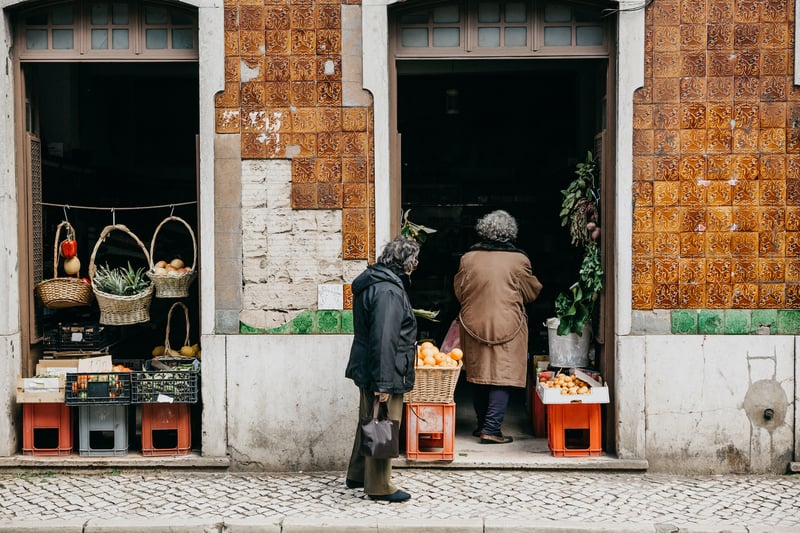
In these next 2 units (Places 1 and Places 2) we’ll cover vocabulary for many different types of buildings and places in Portuguese, such as stores, parks, banks, schools, cities, regions, and more. Whether you’re running errands, sightseeing, or just enjoying different regions of Portugal, knowing the names of places will help you communicate about […]

The Verb Saber
August 1, 2023
The Portuguese verb has two different meanings. Most of the time, it means 🧠 to know, but did you know in certain contexts it can also mean 👅 to taste? Saber is conjugated in the 3rd person singular in both sentences, so it’s written exactly the same, but with an entirely different meaning. In the […]

Saber vs. Conhecer
July 30, 2023
The verbs and cause a lot of confusion for Portuguese learners. If you translate them into English, both mean to know, but in Portuguese you also have to pay attention to the context in order to know 😉 which one to use. Saber: Talking About Information You Know We use saber to talk about facts […]

A Few More Common Irregular Verbs
July 18, 2023
If you remember the Common Irregular Verbs unit, this is part 2! As you may remember, Portuguese verbs can be irregular in the root, the ending, or both, and they are often irregular only in certain tenses. Here’s an overview of most of the verbs we’ll cover in the following Lessons. For now, we’re continuing […]

Indirect Speech
July 12, 2023
In Portuguese, when studying narrative texts, we make the distinction between direct and indirect speech. Direct speech is spoken by a character, while indirect speech is spoken by a narrator, in the third-person. Each is clearly defined by different punctuation, but the verb tenses and conjunctions are different too. In real life, everything is technically […]

Portuguese “Things”
July 11, 2023
Time for a Portuguese vocabulary boost! This Unit will focus on objects/things from many different categories. Most of these words will be new, but some you may have already picked up. To test yourself, cover up the right side and see how many of these objects you can name. You’ll hear how to pronounce each […]
Translator
Hide
0/255