- PracticePortuguese.com
- Vocês já experimentaram Have you(pl.) tried
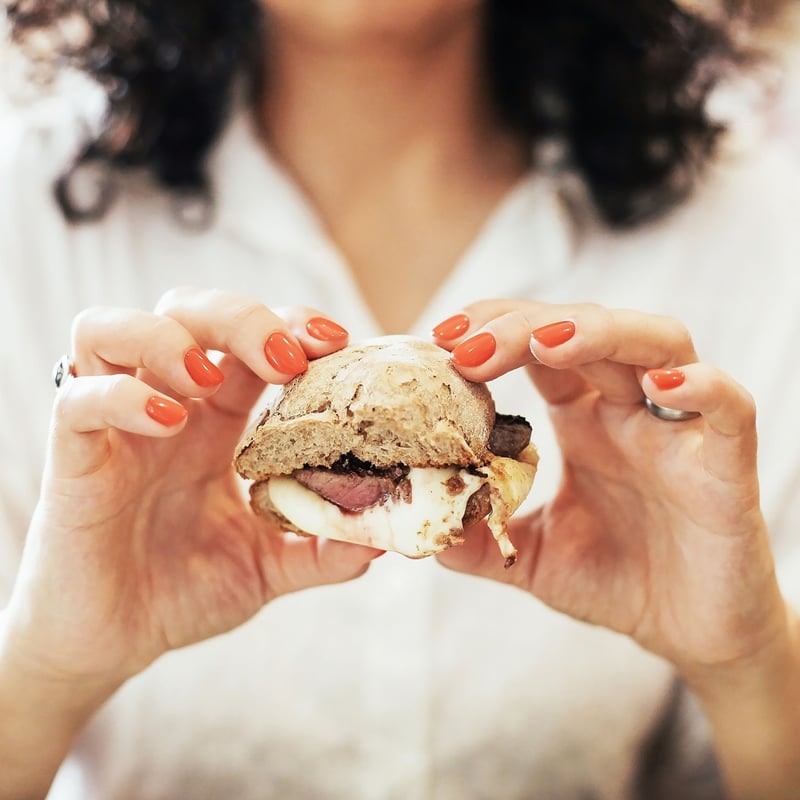
- as sandes de carne mais populares de Portugal? Portugal's most popular meat sandwiches?
- Se não experimentaram, If you haven't,
- aconselho-vos a irem à tasca mais próxima e a provarem. I suggest you go to the nearest tasca and taste them.
- Estes pratos não são simples petiscos - These dishes are not simple snacks -
- são um reflexo das nossas tradições culinárias. they are a reflection of our culinary traditions.
Premium Members get access to this episode's entire transcription, as well as hundreds more!
Vocabulary
achatadoflattened o alhogarlic assarto roast, bake o bifesteak a carne de vacabeef crocantecrispy, crunchy douradogolden sing.,masc. experimentarto try out, taste, experience fofocute, fluffy, soft sing.,masc. a lenhafirewood provarto taste, try, sample, prove realçarto highlight, enhance, emphasize a sandessandwich sentirto feel, sense


Expressions
estar à esperato be waiting, to be expecting dentro deinside of, within por foraon the outside por dentroon the inside
Premium Feature: Smart Review
With a Premium Subscription, you can save these phrases to Smart Review, and use spaced repetition to commit them to long-term memory.
Premium Feature: Episode Quizzes
With a Premium Subscription, you can take episode quizzes to challenge your comprehension skills and track your progress!
People Eduardo
Eduardo






Comments
prego is not translated. The translations I can find do not fit the context which is presumably why it is not translated but what is prego trying to say? Likewise I have always thought papo seco meant a roll but it is not translated as such, is it more ocmplicated?
Olá! The reason the words “bifana” and “prego” are not translated is because there’s not really an adequate translation, other than “pork sandwich” or “beef sandwich”. After naming them, we also explain what they are and the ingredients. So, “prego” is a type of beef sandwich, “bifana” is a pork sandwich, and “papo seco” is a type of bread that’s probably the cheapest traditional white bread available.
Hello – Could you please explain why it’s “cheirinho a bifana” rather than “de” or “da” bifana?
Olá! Both ‘a’ and ‘de’ are correct after the noun ‘cheiro’ or its variations, such as ‘cheirinho’ 🙂 But when we use the verb ‘cheirar’, only the preposition ‘a’ is acceptable, e.g. ‘Aqui cheira a bifana’.
Thanks very much, Joseph
Olá, I would love to know why ‘o segredo está ‘, and not ‘o segredo é’. Is that secret temporary?
It has to do with the phrasing of the sentence. When we say “o segredo está em [X]”, the verb is indicating the metaphorical location of the secret, and in that case, the temporary vs. permanent rule of thumb doesn’t apply. When we say “o segredo é [X]”, then we’re directly explaining the actual secret, which is indeed fixed. For example:
– O segredo está na marinada de carne (case 1) vs. O segredo é fazer uma boa marinada (case 2)