



 Eliana
 Rui
RuiPlease request our permission before redistributing these files.
Premium Feature: Transcript Downloads
With a Premium Subscription, you can also download PDF transcriptions, with or without English translations for printing or offline use.
- Mulher: Amor, vamos dar um passeio? Wife: Sweetheart, shall we go for a walk?
- Marido: Vamos! Onde queres ir? Husband: Let's go! Where do you want to go?
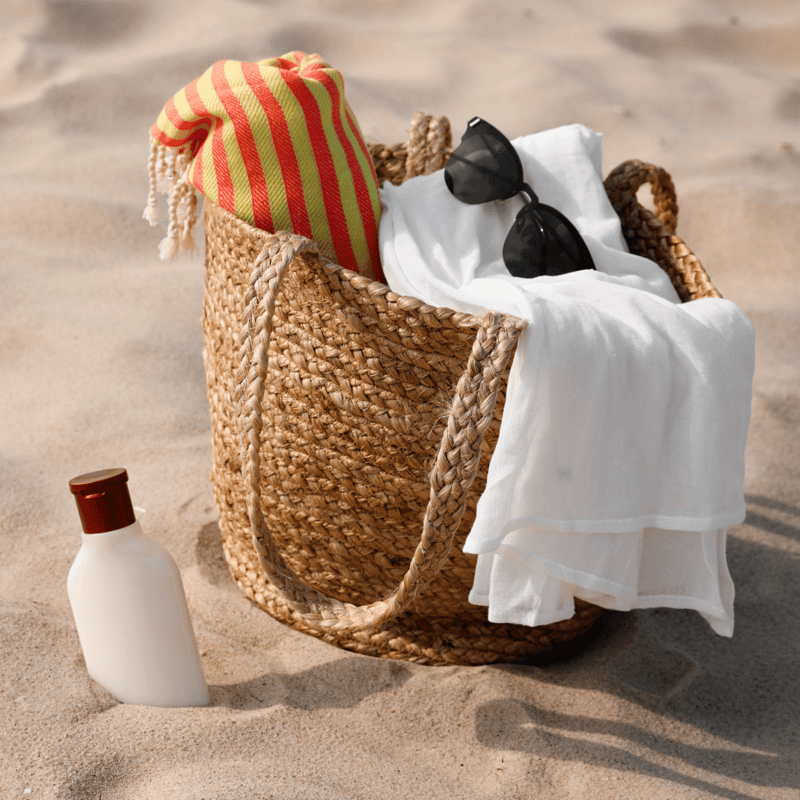
- Mulher: Eu gostava de ir à praia. Preferes ir a outro sítio? Wife: I would like to go to the beach. Would you rather go somewhere else?
- Marido: Não, podemos aproveitar que não está a chover para ir à praia. Husband: No, we can take advantage [of the fact] that it's not raining and go to the beach.
- Mulher: Vai ser giro! Wife: It will be fun!
- Podemos beber um café na esplanada, passear, construir castelos na areia… We can drink a coffee on a terrace, go for a walk, build sand castles…
- Marido: Queres dizer que eu construo castelos na areia e tu ficas a olhar, não é? Husband: You mean that I build sand castles and you look on, right?
Premium Feature: Episode Quizzes
With a Premium Subscription, you can take episode quizzes to challenge your comprehension skills and track your progress!
a areiasand calçar-seto put on one's shoes ChataAnnoying, boring (fem.) as chaveskeys choverto rain construirto build discutirto argue, discuss, quarrel a esplanadaterrace, outdoor seating area of a café or restaurant GiroFun, cool, nice issothat near listener jáalready, yet, right now, ever medirto measure a máquina fotográficacamera olharto look ouvirto listen to, to hear porquebecause a praiabeach preferirto prefer ProntaReady (fem.) sairto leave, go out, exit vestir-seto dress oneself VizinhaNeighbour (fem.)


Expressions
Não é?Isn't it?, Right?, Yeah? dar um passeioto take a walk AmorLove, sweetheart, baby, honey às vezessometimes Não é?Right?, Isn't it? 
Premium Feature: Smart Review
With a Premium Subscription, you can save these phrases to Smart Review, and use spaced repetition to commit them to long-term memory.



Comments
Bom dia! A expressão “medir o peso das palavras” não me é familiar. O que é que significa? Falar demais, ou falar numa maneira rude? Obrigado!
Tenho o mesmo questão 🙂
Olá, Sytze! A expressão refere-se a dizermos coisas sem pensarmos no impacto que as palavras terão nos outros. Por exemplo, dizermos coisas demasiado duras sem necessidade.
Uma conversa muito agradável para nós, principiantes.
“me calçar” Uma forma interessante de dizer “put on my shoes.”
Com certeza a conversa coloca-a no contexto.
Hi, the wife says: Vou só vestir um casaco e podemos ir….
It sounds like the word “vestir” is pronounced “stir”. My question: is the “ve” always silent as in other words starting in “e”, such as “estou”.
Olá, Ronnie. The first syllable of ‘vestir’ is barely there, but we do pronounce it (or try to); it’s not omitted altogether like the es- in “estou” 🙂
Great learning! I’ll like to start!
Quando o marido diz, “..podemos aproveitar que não está a chover para ir à praia,” porque é que ele não usa o infinitivo pessoal, assim:
“…para irmos à praia.”? Ou tanto faz?
Neste caso, tanto faz, porque em toda a frase eles estão sempre a referir-se à mesma pessoa (“nós”). Q infinitivo pessoal é mais importante quando há mudanças de sujeito ao longo da mesma frase ou frases, porque só ele permite distinguir claramente a que pessoa(s) nos referimos em cada momento.
Faz sentido – agora. Obrigado.
Olá,
beginners confusion….the husband says..Eu também só preciso de me calçar..translated as I also need to put on my shoes… but how do I find shoes in this sentence? Is it by inference from the work calçar?
Love these shorties!
Olá, Ruth. We infer it from the verb “calçar”, which is a specific verb we have for putting on shoes, or any piece of clothing that goes on our hands or feet 🙂 With that verb, we usually omit the word for shoes and add a reflexive pronoun instead (e.g. “calçar-ME”). That’s all we need for comprehension. But if we’re talking about socks or gloves, we would most likely say it explicitly, for clarity.
You’ve translated ‘ao menos isso!’ as ‘at least that’. Deepl does the same. But I can’t imagine saying ‘at least that’ in English and I’m struggling to think what I might say instead. Is this something might say in a sardonic manner (‘yeah, right’), a bouncy positive manner (‘certainly that!’) or maybe slightly nagging manner (‘the least you could do’). Obviously all very context dependent, but it sounds like a phrase in common use and ‘at least that’ leaves me a bit adrift.
Also: The link at the top of the shorty to irregular IR verbs is a dead link.
Olá. Good question! It’s a rather literal translation (which was just updated) – the intention is to say something like “At least there’s that” or “Well, that’s something”, i.e. it’s not all bad. This can absolutely be sarcastic 🙂
Thanks for bringing our attention to the dead link – fixed.
O Marido diz: “Oiço, sim”. Doesn’t this have to be “Ouço, sim”?
Good question. This is a word with double spelling, so both forms are correct and interchangeable: oiço and ouço 🙂
Ola! I’m trying to figure out what was said before Joel says “practice portuguese” it sounds Rui says “bom tu come” but I know that wouldn’t make sense??
It’s ponto com, as in dot com at the end of a url. So all together it’s: practiceportuguese.com 😁