 Eduardo
 Joana
Joana- PracticePortuguese.com
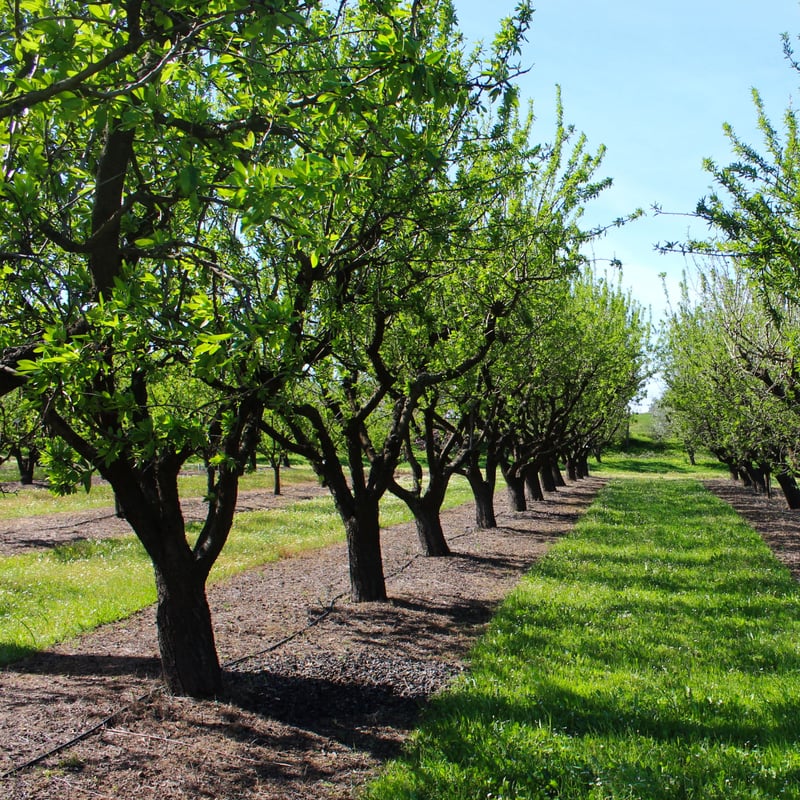
- Eduardo: É hoje que vamos plantar as amendoeiras, não é? Eduardo: We're going to plant the almond trees today, right?
- Mariana: É. Acho que adormeci a pensar nisso, sonhei toda a noite que andava a cavar terra. Mariana: Yes. I think I fell asleep thinking about it, I dreamt all night that I was digging up the earth.
- Eduardo: Pois é, que entusiasmo! Eduardo: Yeah, what enthusiasm!
- As amendoeiras vão ficar bonitas entre as já crescidas aveleiras, castanheiros e nogueiras. The almond trees are going to look beautiful among the already grown hazelnut, chestnut, and walnut trees.
- Mariana: Ficaremos aqui com uma boa família de árvores autóctones de frutos secos. Mariana: We'll have a good family of native nut trees here.
- Eduardo: Esticas a mangueira da água enquanto eu vou buscar o composto? Eduardo: Will you stretch out the water hose while I get the compost?
Premium Members get access to this episode's entire transcription, as well as hundreds more!
Vocabulary
as amendoeirasalmond trees apodrecerto rot autóctonenative, indigenous, autochthonous o buracohole o castanheirochestnut tree a enxadahoe o estrumemanure os frutos secosnuts, dried fruits a mangueirahose a nogueirawalnut tree oliveiraolive tree podarto prune, to trim as raízesroots regarto water, irrigate a relvagrass vislumbrarto glimpse


Expressions
Vale a penaIt's worth it, It's worthwhile Força!Go ahead!, Go for it!, Do it! estar com bom aspetoto be looking good
Premium Feature: Smart Review
With a Premium Subscription, you can save these phrases to Smart Review, and use spaced repetition to commit them to long-term memory.
Premium Feature: Episode Quizzes
With a Premium Subscription, you can take episode quizzes to challenge your comprehension skills and track your progress!




Comments
Another great script, thanks. Just one question: at about 1 minute 36, Eudardo says “ … já lhe vemos a flor”. I would have expected “já a vemos a flor”, Is there a reason why it’s “lhe”?
Thanks for your comment. We can only use the clitic pronouns “o(s)” or “a(s)” when replacing direct objects. In this case, it’s not the direct object (“flor”) that’s being replaced, but the indirect object “amendoeira”, so “lhe” is appropriate.
That’s really interesting Joseph, and thank you. So to be clear – “a flor” is the direct object? I had assumed that it meant something like “in flower”, with “a” as a preposition, so that the tree would be the direct object.
Yet another one to chew on!
You’re welcome! Yes, “a flor” is the direct object in the Portuguese sentence. The English translation is a more idiomatic than literal adaptation of the Portuguese wording, which would be something more or less like “we’ll see the flower on it”. On the other hand, the direct translation of “in flower” would be “em flor” (which we do use in Portuguese as well).
👍👍
Hi
Can you remind me of the grammatical use of the verb andar in this phrase please?
“que andava a cavar terra.”
Olá! “Andava a” is being used as an alternative to “estava a”, to express continuity of action (past continuous).
Sorry, another question
“Ficou amontoada ao relento e foi apodrecendo com a humidade, até ficar desta forma.”
Could I also say “estava a apodrecendo”?
Would it change the meaning at all in this context?
“Foi apodrecendo” is a very typical choice in this context, to express the progressiveness of a certain action or state up until the final outcome, or at least, until the current situation. So, there is a conclusiveness to it that isn’t well expressed by the imperfect “estava”, which feels rather open-ended here. But you could eventually use “esteve a apodrecer” (standard form in the mainstream Portuguese dialect) or “esteve apodrecendo” (alternative form that could work well, for example, in the Alentejan dialect).