 Pedro
PedroWe've unlocked the Premium Features for this special episode! Members get access to features just like this across our entire library. Learn More
Please request our permission before redistributing these files.
- Ao enfrentarmos esta pandemia, todos procuramos formas de conter a proliferação do vírus. As we face this pandemic, we're all looking for ways to contain the proliferation of the virus.
- Para além de permanecer em casa tanto quanto possível, In addition to staying at home as much as possible,
- a nossa higiene pessoal é agora mais importante do que nunca. our personal hygiene is now more important than ever.
- Por vezes, os hábitos mais simples fazem a maior diferença. Sometimes the simplest habits make the greatest difference.
- Por exemplo, se tiver de espirrar ou tossir, use um lenço ou a parte interior do seu cotovelo, For example, if you have to sneeze or cough, use a tissue or the inside of your elbow
- ao invés das suas mãos. instead of your hands.
- Também é importante limpar frequentemente as superfícies em que mais tocamos, It is also important to clean the surfaces which we touch most,
- tais como as maçanetas das portas e interruptores. such as door knobs and [light] switches.
- Evite tocar na cara e lave as mãos regularmente. Avoid touching your face and wash your hands regularly.
- A melhor forma de as higienizar é com água e sabão. The best way to sanitize them is with soap and water.
- Na impossibilidade de o fazer, If this cannot be done,
- a melhor opção é utilizar uma solução de álcool gel que contenha pelo menos 60% de álcool. the best option is to use a gel alcohol solution containing at least 60% alcohol.
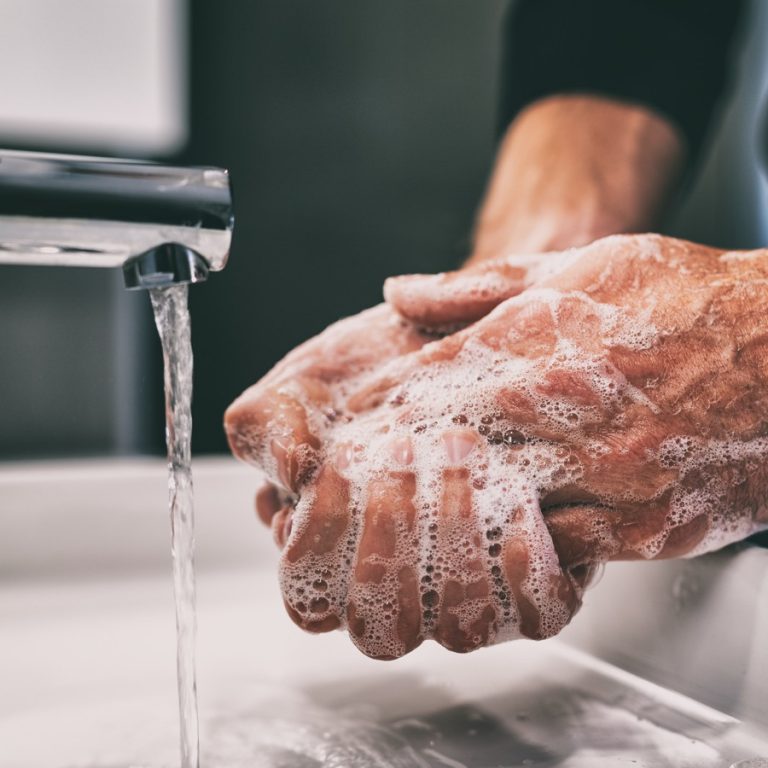
- Vamos rever as etapas para a correta higienização das mãos – Let's review the steps for proper hand hygiene –
- Abra a torneira e molhe as mãos. Open the tap and wet your hands.
- Utilize sabonete e esfregue as mãos durante 20 segundos. Use soap and rub your hands [together] for 20 seconds.
- Não se esqueça de limpar por baixo das unhas e entre os dedos. Don't forget to clean under your fingernails and between your fingers.
- Passe as mãos por água. Rinse your hands. ("Pass your hands through water.")
- Utilize papel descartável para as secar. Use disposable paper to dry them.
- Utilize o mesmo papel para fechar a torneira. Use the same paper to turn off the tap.
- Os sintomas mais comuns do COVID-19 incluem febre, tosse e dificuldades respiratórias. The most common symptoms of COVID-19 include fever, cough, and breathing difficulties.
- Os sintomas poderão aparecer entre o 2º e o 14º dia após o contacto com o vírus. Symptoms may appear between day 2 and day 14 after contact with the virus.
- Por esse motivo, é importante que siga estas indicações mesmo que não apresente quaisquer sintomas. For that reason, it is important that you follow these instructions even if you do not have any symptoms.
Como se pode conter a proliferação do vírus?
Ficar todo o dia na cama
Permanecendo em casa tanto quanto possível
Saindo de casa todos os dias
O que se deve fazer quando se espirra ou tosse?
Usar um lenço ou o cotovelo
Ligar para a Saúde 24
Entrar em pânico
Devemos evitar...
Ficar em casa
Beber água
Tocar com as mãos na cara
O que se deve limpar frequentemente?
Os tapetes
As superfícies em que mais tocamos
A roupa
Durante quanto tempo devemos lavar as mãos?
1 minuto
20 segundos
2 minutos
aparecerto appear, show up o cotoveloelbow os dedosfingers descartáveldisposable a diferençadifference enfrentarto face, confront esfregarto rub espirrarto sneeze As etapasthe stages / steps a febrefever fecharto close, shut a forma (open O) shape, form, way higienizarto sanitize o hábitohabit, custom as indicaçõesdirections, instructions, indications Os interruptoresswitches o lençotissue Maçanetas das portasDoor handles, Doorknobs molharto wet as mãoshands a opçãooption a pandemiapandemic permanecerto stay, to remain ProliferaçãoProliferation quaisquerany RespiratóriasRespiratory reverto review o sabonetesoap o sabãosoap secarto dry o sintomasymptom as superfíciessurfaces a torneiratap, faucet, spigot a tossecough tossirto cough as unhasnails body part o vírusVirus o álcoolalcohol


Expressions
Tais comoSuch as Tanto quanto possívelAs much as possible Mais importante do que nuncaMore important than ever Ao invés deInstead of Higiene pessoalPersonal hygiene Para além deApart from, Besides, In addition to por vezessometimes, at times 








Comments
E cante “parabéns” duas vezes enquanto lava as mãos!!……20 segundos!
Hello, Thank you so much, i leart a lot of new words.
Olá, boa tarde, muito obrigada, aprendi muitos vocabularios pelo essa aula. vou continuar.
Bom fim de semana.
Comprimentos
Olá Jia e obrigado pela mensagem. Ainda bem que estás a aprender muito vocabulário 🙂 Cumprimentos e bom fim de semana para ti também!
Thank you for posting this story related to virus vocabulary. I had to cancel my trip to Portugal for now and am using my time to study Portuguese. This keeps my spirits up and helps me look forward to the day I can finally visit Portugal.
Hi John! I’m you “fellow sufferer” from Finland. I was going to move to Lisbon for work this month, but it has now been postponed. I subscribed to this site today. Happy learning, take care!
I would not have called this shortie easy, but I’ve still got long way to go with the lessons.
Don’t feel bad, there’s a wide range in the easier shorties and it’s approximate. We are actually considering creating another difficulty level to help divide them up better. This one would be a little bit easier if you’ve gone through the “Imperative” unit, but there are still some less common verbs and other forms in this one. Thanks for the feedback!
This was such a helpful shortie! Thank you.
Nesta frase “(00:00:53) A melhor forma de as higienizar é com água e sabão.”, a palavra “higienizar” é um verbo, porque use aqui, “… de as higienizar …”, em vez de “… das higienizações …”?
Obrigado.
Olá. Em “…de as higienizar…”, a palavra “as” não é um artigo definido (definite article), mas sim um pronome clítico (clitic object pronoun) que substitui a palavra “mãos”. Ou seja, “as” não significa “the”, mas sim “them”. É por isso que a frase tem “de as” em vez de “das” e é por isso que se usa o verbo higienizar em vez do substantivo higienização. No entanto, se a frase for escrita de outras formas, é possível usar o substantivo. Por exemplo:
– A melhor forma de higienização das mãos é com água e sabão (The best way/method of hand sanitizing is with soap and water)
Olá,
Pode por favor escrever como dizer 14º . Não consegui ouvir bem a palavra correctamente durante a coversa.
Obrigada 🙂
Olá Maureen!
Claro que sim. 14° escreve-se: décimo quarto. “Quarto” é uma palavra homónima. Tanto pode significar fourth como room/bedroom. “Décimo quarto” aqui é 14° (e não 10th bedroom)! ☺️
Pode ver mais sobre isto nesta unidade:
https://www.practiceportuguese.com/learning-notes/ordinal-numbers/