 Marina
- Uma aventura na autocaravana An adventure in a campervan
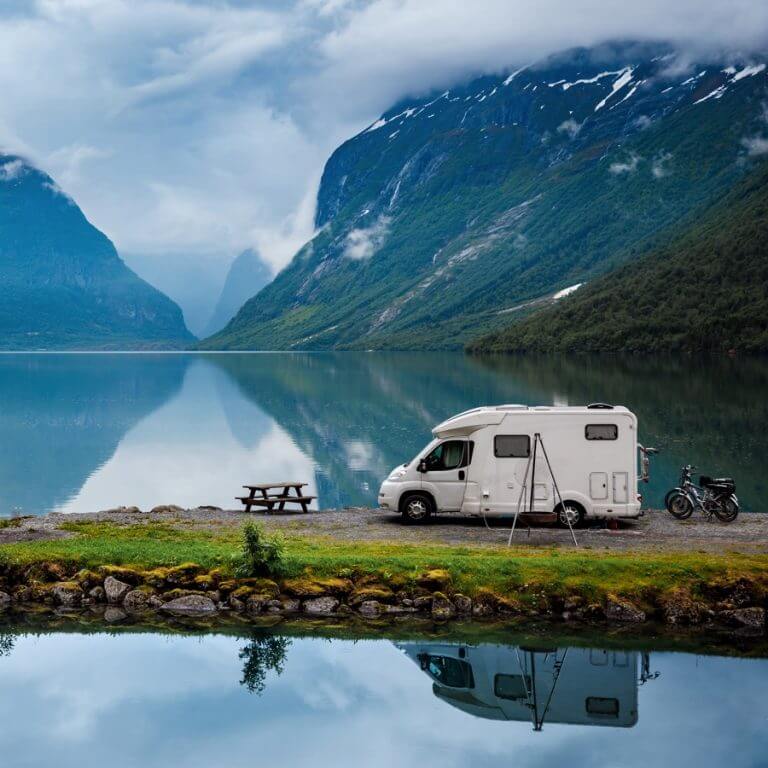
- Quando chegam as férias de verão, nada é melhor do que podermos andar com a nossa casa às costas, When summer break comes, nothing is better than being able to ride around "with our house on our back",
- pois, como dizem os antigos, “casa há só uma” e é nela que nós nos sentimos sempre bem. because as the old people say, “there is only one home” and that is where we always feel good.
- No nosso caso, nós andamos mesmo com ela às costas, uma vez que temos uma autocaravana. In our case, we ACTUALLY carry it around on our backs, since we have a camper.
- Gosto muito deste tipo de férias! I love this kind of vacation!
- Assim, temos tudo o que precisamos This way, we have everything we need
- e liberdade para nos aventurarmos, podendo parar onde nos apetece. and the freedom to venture out, being able to stop where we feel like.
Premium Members get access to this episode's entire transcription, as well as hundreds more!
Vocabulary
os amigosfriends a autocaravanaCampervan, motorhome a aventuraadventure campistascampers a estradaroad as fériasvacations, holidays a liberdadefreedom, liberty o monumentomonument o mundoworld a noitenight, evening normalmenteusually, normally nómadasnomads, nomadic pl. a praiabeach reabastecerto replenish, restock, refuel TendasTents


Expressions
uma vez quesince, as Parques de campismoCampsites andar com a casa às costasto travel around from one place to another with all the belongings you packed i.e. "with your house on your back" Casa há só uma"There is only one house", There's no place like home por vezessometimes, at times
Premium Feature: Smart Review
With a Premium Subscription, you can save these phrases to Smart Review, and use spaced repetition to commit them to long-term memory.
Premium Feature: Episode Quizzes
With a Premium Subscription, you can take episode quizzes to challenge your comprehension skills and track your progress!





Comments
I love the shorties and learn a lot, thanks. But I’m confused by the conjugation of ‘apetece’ in “podendo parar onde nos apetece”. Why is it not ‘apetecemos’?
Thanks
Good question. The verb ‘apetecer’ is generally considered impersonal and used in an abstract 3rd-person form. With that verb, we are not the subject, but actually the indirect object, so there’s no agreement with ‘us’ nor with the thing we want, which would be the direct object. For example:
1) “Apetece-nos um croissant”. Direct object: um croissant. Indirect object: -nos (we/us).
Thank you. So in this sentence it reads like “It feels like a croissant for us”? Are there many other impersonal verbs in Portuguese which don’t require any place holder for the “it”, like using “se”?
If it helps you to read the sentence like that, sure. In general, verbs that are impersonal by default are used on their own, like ‘haver’ or any verbs related to natural phenomena (amanhecer, anoitecer, entardecer, chover, nevar…). You’ll see the impersonal pronoun -se with verbs that are not treated as impersonal by default, but may be used as such in certain sentences. For example:
– Vende-se livros. (Books on sale)
– Trata-se de animais. (It’s animals)
Mas não deve ser “… podemos reabastecer-nos de água.”?
Olá! Thanks for catching that, and sorry. The speaker did say ‘podemos reabastecer-nos de água.’ That is also the appropriate choice in context, as ‘podemos reabastecermo-nos’ is redundant and not idiomatic. It’s already been fixed 🙂