 Natacha
 Pedro
PedroPlease request our permission before redistributing these files.
Premium Feature: Transcript Downloads
With a Premium Subscription, you can also download PDF transcriptions, with or without English translations for printing or offline use.
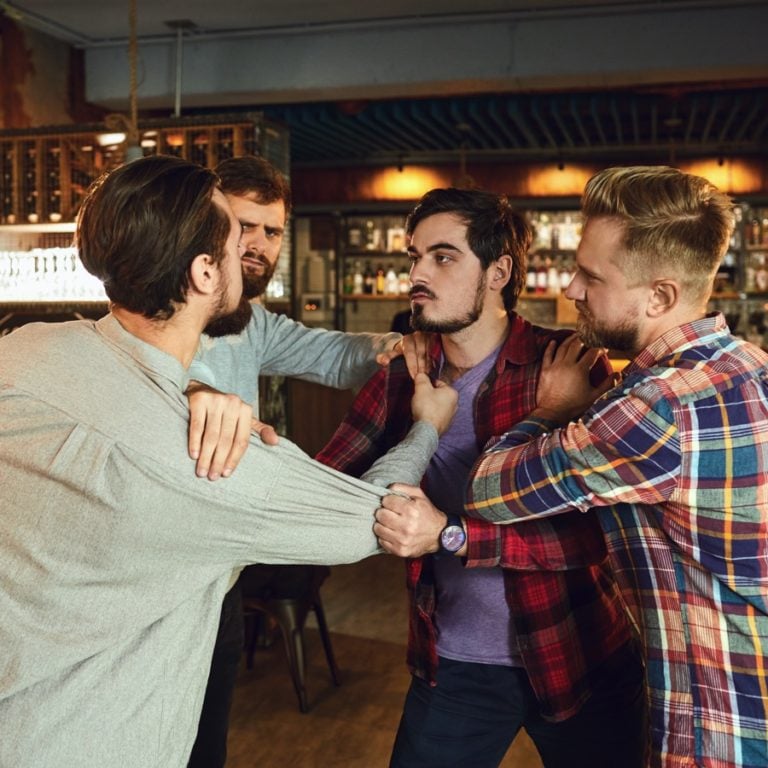
- Bruna: Ó Filipe, o que é que te aconteceu ao olho? Bruna: Hey, Filipe, what happened to your eye?
- Filipe: Andei à batatada. Filipe: I've been fighting.
- Bruna: O que é que aconteceu? Bruna: What happened?
- Filipe: Ontem fui para os copos com os meus colegas do trabalho e apanhei uma cadela. Filipe: Yesterday, I went to have drinks with my work buddies and got drunk.
- Filipe: Depois conheci uma rapariga muito gira, mas, infelizmente, ela tinha namorado. Filipe: Then I met a really cute girl, but unfortunately she had a boyfriend.
- Bruna: Deixa-me adivinhar... Fizeste-te ao bife e o namorado da rapariga bateu-te. Bruna: Let me guess... You were hitting on her and the girl's boyfriend punched you.
- Filipe: Não exatamente. Ele só chegou perto de mim e disse – Filipe: Not exactly. He just came up to me and said,
Premium Feature: Episode Quizzes
With a Premium Subscription, you can take episode quizzes to challenge your comprehension skills and track your progress!
adivinharto guess, predict, figure out ameaçarto threaten baterto hit, beat, whip, knock cadeirachair despejarto pour, to dump espetarto stick, skewer, prod fugirto escape, run away o gajoguy, fella slang a namoradagirlfriend o namoradoboyfriend PáMan, dude, well, um Used for emphasis or as a filler word sarilhostrouble, mischief


Expressions
Eu não tenho papas na línguaI don't mince words Podes tirar o cavalinho da chuvaDon't even think about it Estou feito ao bifeI'm dead meat Literally: I am done to the steak Eu pedi desculpaI apologized Apanhei uma cadelaI got drunk Literally: I caught a female dog Armou-se em carapau de corridaHe got cocky He acted like a horse mackerel Andei à batatadaI've been fighting Eu fervo em pouca águaI have a short temper (Literally: I boil in little water) Fazer num oitoTo beat up (Literally: To make into an 8) Fui para os coposI went to have drinks (Literally: I went for the glasses) Fugi a sete pésI ran off as fast as I could (Literally: I ran off on seven feet) 
Premium Feature: Smart Review
With a Premium Subscription, you can save these phrases to Smart Review, and use spaced repetition to commit them to long-term memory.



Comments
Excellent episode! Thank you!
A very nice one, ha,ha . Most of your shorties are very well-behaved. So I understand that the pressure might be building up a bit and that the relieve valve has to do its work now and then.
Congrats!
By the way, I was waiting for our Dona Gertruda making her entrance into the story so as to make short work with the other guys.
Keep on the good work,
Abraço
Rens Leenders
Hi there
Loved this. Lots of great expressions.
Please could you explain the first “fazer-se ao bife “ expression , is it different from the second ao bife usage.
Many thanks,
Debbie
“Fazer-se ao bife” means that you’re trying to reach or get something – or usually, someone. If you translated it literally, you’d get something like “(trying to) reach that steak”. “Estar feito ao bife” is different, it means that you’re screwed, you’re toast 🙂 The verb ‘estar’ is essential to convey this difference in meaning.
Thank you !
Esses expressões idiomáticas sao específicos de Lisboa? Ou estão todos em uso no Porto também?
As expressões idiomáticas deste shorty são usadas um pouco por todo o país 🙂 A expressão menos comum aqui é “apanhar uma cadela” (ficar bêbado), mas também não é exclusiva de uma só região.
Shouldn’t it be arrumar confusão? That’s the only term I can find on Google.
Olá, Margit. “Arrumar confusão” is typical of Brazilian Portuguese. In European Portuguese, “armar confusão” is preferable 🙂
In the lesson the idiom “Ele armou-se em carapau de corrida” is followed by the explanation:
“Literally: He acted like a horse mackerel “
Um, I don’t think that is the literal translation?Translated literally, it would be:
“He armed himself in horse mackerel of race”
The idiomatic translation meanwhile is given as, “He got cocky!”
What is the origin of this phrase please? I find things are much easier to remember when you understand them! This just makes no sense to me as it’s currently explained.
Olá! The origin is uncertain and there are at least two common theories. One is that mackerel are really fast swimmers, but no matter how fast they “race” through water, they can still get caught, which serves as a metaphor for overconfident people. The other theory is related to fishmongers who would “race” to markets to sell overpriced mackerel, which then became a metaphor for cocky people overselling themselves in a way. Independently of this idiom, the verb “armar” itself does have that additional possible meaning of “acting like X” when used reflexively.