1
00:00:03,141 –> 00:00:12,088
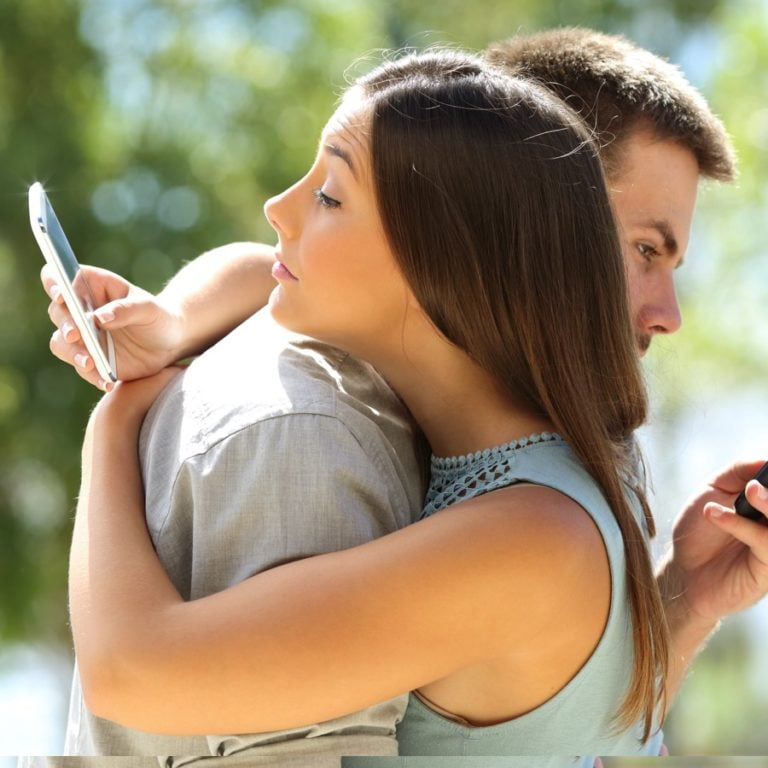
Carla e Marcelo são casados, e assistem juntos a um documentário sobre os perigos da internet.
{{Carla and Marcelo are married, and together they watch a documentary about the dangers of the internet.}}
2
00:00:13,022 –> 00:00:17,668
Sentados no sofá, conversam sobre o que acabaram de ver!
{{Sitting on the couch, they talk about what they just saw!}}
3
00:00:18,422 –> 00:00:22,275
Carla: Marcelo, temos mesmo de passar menos tempo online.
{{Carla: Marcelo, we really have to spend less time online.}}
4
00:00:22,917 –> 00:00:32,359
Marcelo: Sim, passamos a vida toda com os olhos pregados ao ecrã. Estamos sempre rodeados por computadores, telemóveis…
{{Marcelo: Yes, we spend our lives with our eyes nailed to the screen. We’re always surrounded by computers, cell phones…}}
5
00:00:33,045 –> 00:00:36,314
Carla: Tu ainda tens sorte com o teu trabalho, que é muito manual!
{{Carla: You’re still lucky with your work, which is very manual!}}
6
00:00:36,839 –> 00:00:42,848
Já eu trabalho no computador, passo as viagens de metro no telemóvel, enfim…
{{I, on the other hand, work on the computer, I spend the metro trips on my cell phone, oh well…}}
7
00:00:43,348 –> 00:00:48,580
Marcelo: Hoje em dia, já nem conseguimos ir até à casa de banho sem o telemóvel!
{{Marcelo: Nowadays, we can’t even go to the bathroom without a cell phone!}}
8
00:00:49,360 –> 00:00:52,467
Carla: Não quero gastar a minha vida a olhar para um ecrã.
{{Carla: I don’t want to spend my life looking at a screen. }}
9
00:00:52,950 –> 00:00:57,311
Se continuarmos assim, os nossos filhos vão seguir o nosso exemplo.
{{If we continue like this, our children will follow our example.}}
10
00:00:57,708 –> 00:01:01,697
Marcelo: Também não exageres. Não estamos assim tão viciados!
{{Marcelo: Don’t exaggerate either. We’re not that addicted!}}
11
00:01:02,261 –> 00:01:08,410
Carla: Acho que estamos. Olha, tenho uma ideia. Vamos tentar, pelo menos ao fim de semana,
{{Carla: I think we are. Look, I have an idea. Let’s try, at least for the weekend,}}
12
00:01:08,886 –> 00:01:13,201
deixar os telemóveis à entrada de casa e viver um pouco sem internet.
{{to leave the mobile phones at the door (entrance of the house) and live a little bit without internet.}}
13
00:01:13,877 –> 00:01:17,905
De repente, até me apetece ler um jornal em papel ou um livro!
{{Suddenly, I even feel like reading a paper newspaper or a book!}}
14
00:01:19,041 –> 00:01:21,263
Marcelo: Boa ideia, vamos tentar isso.
{{Marcelo: Good idea, let’s try that.}}
15
00:01:23,561 –> 00:01:33,041
O fim de semana chega e, como combinado, Carla e Marcelo deixam os telemóveis numa caixa à entrada de casa.
{{The weekend comes and, as agreed, Carla and Marcelo leave their mobile phones in a box at the entrance of the house.}}
16
00:01:33,719 –> 00:01:35,960
Carla: Onde vamos jantar, logo à noite?
{{Carla: Where are we going to have dinner later tonight?}}
17
00:01:36,521 –> 00:01:42,576
Marcelo: Boa pergunta… dava jeito ter o telemóvel para pesquisar e ver algumas sugestões.
{{Marcelo: Good question… it would be useful to have the phone to research and see some suggestions.}}
18
00:01:43,041 –> 00:01:46,393
Carla: E quebrávamos a decisão que acabámos de tomar…
{{Carla: And we’d break the decision we just made…}}
19
00:01:46,995 –> 00:01:53,628
Marcelo: Mas assim é difícil. A não ser que te apeteça ir jantar a um restaurante a que já tenhamos ido.
{{Marcelo: But it’s hard like this. Unless you feel like going to dinner at a restaurant we’ve already gone to.}}
20
00:01:54,438 –> 00:01:59,434
Carla: Não! Sabes que sou sagitariana e gosto sempre de ir a sítios novos.
{{Carla: No! You know I’m a Sagittarius (astrological sign), and I always like to go to new places.}}
21
00:02:00,008 –> 00:02:07,730
Carla: Pesquisa rápido no telemóvel apenas isso, e continuamos depois com a nossa “dieta” digital de fim de semana!
{{Carla: Do a quick search on your phone, just that, and then we’ll continue our weekend digital diet!}}
22
00:02:08,618 –> 00:02:09,201
Marcelo: Combinado!
{{Marcelo: Deal!}}
23
00:02:10,709 –> 00:02:15,808
Carla e Marcelo preparam-se para sair de casa e entram no carro.
{{Carla and Marcelo get ready to leave the house and get in the car.}}
24
00:02:17,155 –> 00:02:21,468
Marcelo: Vou ter de pegar no telemóvel para colocar a morada no GPS.
{{Marcelo: I’m going to have to take the phone out to put the address in the GPS.}}
25
00:02:22,141 –> 00:02:25,665
Carla: Não conseguimos mesmo livrar-nos da internet, pois não?
{{Carla: We really can’t free ourselves of the internet, can we?}}
26
00:02:26,154 –> 00:02:31,486
Marcelo: Sabes que é difícil! Agora não vou comprar um mapa de papel para pôr no carro.
{{Marcelo: You know it’s hard! I’m not buying a paper map to put in the car.}}
27
00:02:32,429 –> 00:02:39,067
Não podemos ser extremistas, Carla. Já reduzimos bastante o acesso à internet, sabes bem…
{{We can’t be extremists, Carla. We’ve already reduced our internet access a lot, you know…}}
28
00:02:39,848 –> 00:02:41,560
Carla: Sim, tens razão.
{{Carla: Yeah, you’re right.}}
29
00:02:43,180 –> 00:02:51,182
Carla recebe uma chamada da irmã durante a viagem, e aproveitam para colocar a conversa em dia.
{{Carla receives a call from her sister during the trip, and they take the opportunity to catch up.}}
30
00:02:52,544 –> 00:02:55,159
Marcelo: Então, que novidades contou a Ana?
{{Marcelo: So, what news did Ana tell you?}}
31
00:02:56,022 –> 00:03:01,336
Carla: A Ana vai jantar com o Mateus na mesma zona e perguntou se queríamos depois beber um copo!
{{Carla: Ana’s having dinner with Mateus in the same area and she asked if we’d like to have a drink afterwards.}}
32
00:03:02,200 –> 00:03:09,116
Marcelo: Ótimo! Sempre podemos relaxar e pôr a conversa em dia. Tenho saudades de estar com eles.
{{Marcelo: Great! We can always relax and catch up. I miss being with them.}}
33
00:03:10,008 –> 00:03:13,364
Carla: Ela vai-me enviar a localização de um bar que gosta muito.
{{Carla: She’s gonna send me the location of a bar she really likes.}}
34
00:03:13,997 –> 00:03:15,153
Marcelo: Para o telemóvel?
{{Marcelo: To your cell phone?}}
35
00:03:15,772 –> 00:03:18,083
Carla: Pois, tem mesmo de ser, Marcelo.
{{Carla: Yeah, it really has to be, Marcelo.}}
36
00:03:18,837 –> 00:03:20,197
Marcelo: É impossível, não é?
{{Marcelo: It’s impossible, isn’t it?}}
37
00:03:21,099 –> 00:03:27,319
Carla: É difícil, mas desde que usemos de um modo mais consciente, não me parece preocupante…
{{Carla: It’s hard, but as long as we use it in a more conscious way, it doesn’t seem worrying to me.}}
38
00:03:28,055 –> 00:03:34,968
Marcelo: Sim, sim… E não vais querer tirar aquela ‘selfie’ de grupo e postar no Facebook logo à noite?
{{Marcelo: Yeah, yeah… And aren’t you going to want to take that group selfie and post it to Facebook tonight?}}
39
00:03:35,571 –> 00:03:37,833
Carla: Se for só uma, que mal tem?
{{Carla: If it’s just one, what’s wrong with that?}}
40
00:03:38,587 –> 00:03:40,970
Marcelo: Nenhum, nenhum mesmo!
{{Marcelo: Nothing, nothing at all!}}
 Natacha
 Pedro
Pedro







Comments
This Shorty was a Longy compared to the others – but still great. I love these Shorties!
Several uses of the conjuntivo that are so beneficial to hear.
bom dia! A não ser que te apeteça ir jantar a um restaurante a que já tenhamos ido. why is it not “apetecas” because it’s te? and why it’s not tinhamos ido? because it’s talking about a restaurante they’ve been to, and that’s a fact happened already in the past, while conjuntivo presente talks about possibilities. Thanks for help!
Olá, Hana! “Apeteças” is not used because the subject of the sentence is not “tu”. The verb “apetecer” is being used impersonally, without subject, and “te” is its indirect object. Because of that, the verb isn’t conjugated in the second-person singular, “apeteças”.
The second half of the sentence asks for the pretérito perfeito (simple past). It would be fine to use the pretérito perfeito do indicativo (…a um restaurante a que já fomos), but it is just as fine to use the pretérito perfeito composto do conjuntivo (…a um restaurante a que já tenhamos ido) because both refer to past events that are already concluded. “Tínhamos ido” wouldn’t make sense in this context, because this tense (pretérito mais-que-perfeito composto do indicativo) points to a “past before the past”, so to speak – it’s a different timeline that doesn’t fit here.
Hi, thanks so much for your reply. Ït’s clear and thorough. Can I just ask another further question?
why is Marcelo using the impersonal in the sentence “‘a nao ser que te apeteca ir jantar…..”? Clearlly he’s refering to Carla, right?
You’re welcome! And sure, ask away. This is just how the verb apetecer works. When we want something, we become the indirect object of the verb and the thing we want is the direct object. For example: Apetece-me uma bebida. Direct object (what we want): uma bebida [a drink]. Indirect object (who wants it): -me [me/I]. In the dialogue, Marcelo is wondering if Carla wants to have dinner at a certain place, so Carla is the indirect object (te) and having dinner at X place is the direct object.
As above, quite long for a shortie! Difficult to keep the concentration for me !!
I am struggling with the expression “dava jeito” (1:36). This sentence and the reply seem to me to calling for the subjunctive (or conditional…..I struggle a lot with these tenses) but not the imperfect indicative, as used. The english translation uses ‘could’ and ‘would’ indicating possibility, a hypothetical. I’m confused! Thanks for your help and the fantastic site.
Olá! You are correct – this asks for the conditional 🙂 What you are seeing with “dava jeito” is just one of those cases where the imperfect indicative stands in as a ‘de facto’ conditional form. It’s quite common in informal speech to use the imperfect instead of the conditional because it feels less formal or stuffy, so to speak. The same happens when we say, for example, “Gostava de…” instead of “Gostaria de…”.