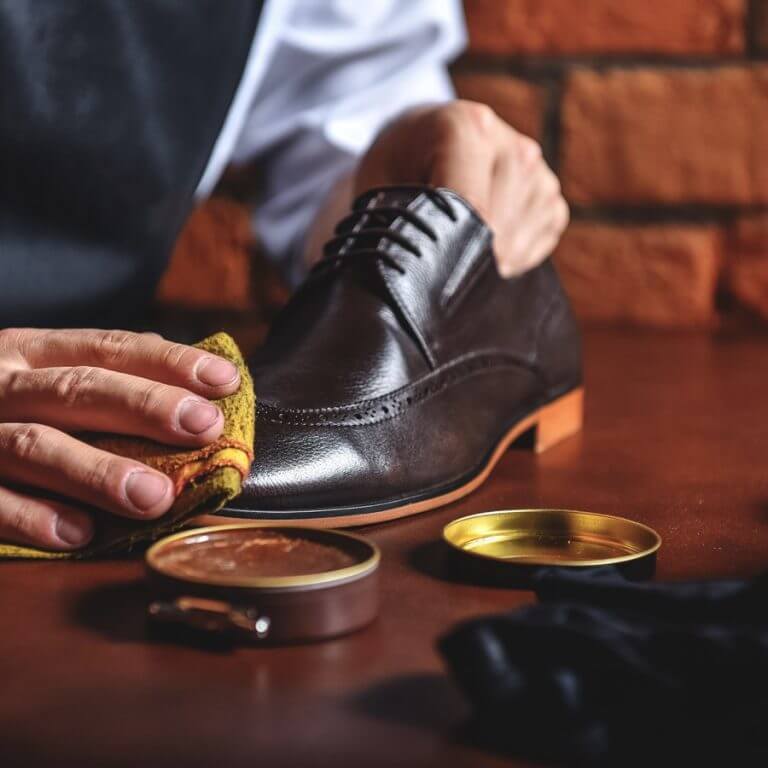
- Uma arte que não é muito falada é a de engraxar sapatos. An art that is not widely spoken [of] is shining shoes.
- Enquanto profissão, ganhou popularidade gradualmente a partir do século XIX, As a profession, it gained popularity gradually from the nineteenth century onward,
- sendo tradicionalmente praticada por jovens rapazes. being traditionally practiced by young boys.
- Esta arte valoriza uma das mais importantes peças do nosso vestuário: os sapatos – This art values one of the most important pieces of our clothing, the shoes,
- pois pode melhorar o nosso aspeto ou arruiná-lo totalmente, as it can enhance our look or ruin it completely,
- independentemente da qualidade ou beleza das outras peças. regardless of the quality or beauty of the other pieces.
- Um simples par de sapatos pode até ser uma indicação de traços da nossa personalidade, A simple pair of shoes can even be an indication of our personality traits
Premium Members get access to this episode's entire transcription, as well as hundreds more!
Vocabulary
a belezabeauty as botasboots a cerawax o engraxadorshoeshiner masc. EscovadoBrushed a graxagrease RapazesBoys, guys os sapatosshoes Ténis de couroLeather sneakers vestuárioclothing, apparel


Premium Feature: Smart Review
With a Premium Subscription, you can save these phrases to Smart Review, and use spaced repetition to commit them to long-term memory.
Premium Feature: Episode Quizzes
With a Premium Subscription, you can take episode quizzes to challenge your comprehension skills and track your progress!
People Kena
Kena
Kena









Comments
I liked this one a lot. I am interested in the variations in her ways of pronouncing ‘os sapatos’.
Sometimes it sounds like ‘sa pa tush’, other times (e.g. the very first sentence) ‘sah patch’. Is there reason, or just rhyme, to this?
paisley
Thank you for your comment! The differences you note are due to varying inflection, there’s no real difference in pronunciation 🙂 For extra emphasis and clarity, she occasionally overpronounces “sapatos” down to the last syllable (e.g. “Esta arte valoriza uma das mais importantes peças do nosso vestuário: os sapatos”). Then, in other parts of the article, she just says the word as she normally would (with a subtle to non-existent O at the end).
Thanks! Guess this is like English. Just think how many different ways we say ‘going’ (gunna, goin’, going…). Last time I was on Madeira I overheard a local person
pronounce ‘Pingo Doce’ (4 syllables!) as a two syllable word: ‘Ping Dos’.
Haha, yes. And the faster we speak, the more syllables we fuse or drop altogether. ‘Ping Dos’, for example, is something you might also hear in mainland Portugal, for sure 🙂