1
00:00:00,000 –> 00:00:03,450
PracticePortuguese.com
2
00:00:03,450 –> 00:00:05,630
Pai: Olá, filha. Entra.
{{Father: Hello, daughter. Come in.}}
3
00:00:05,630 –> 00:00:06,430
Filha: Olá, pai.
{{Daughter: Hi, Dad.}}
4
00:00:06,430 –> 00:00:07,810
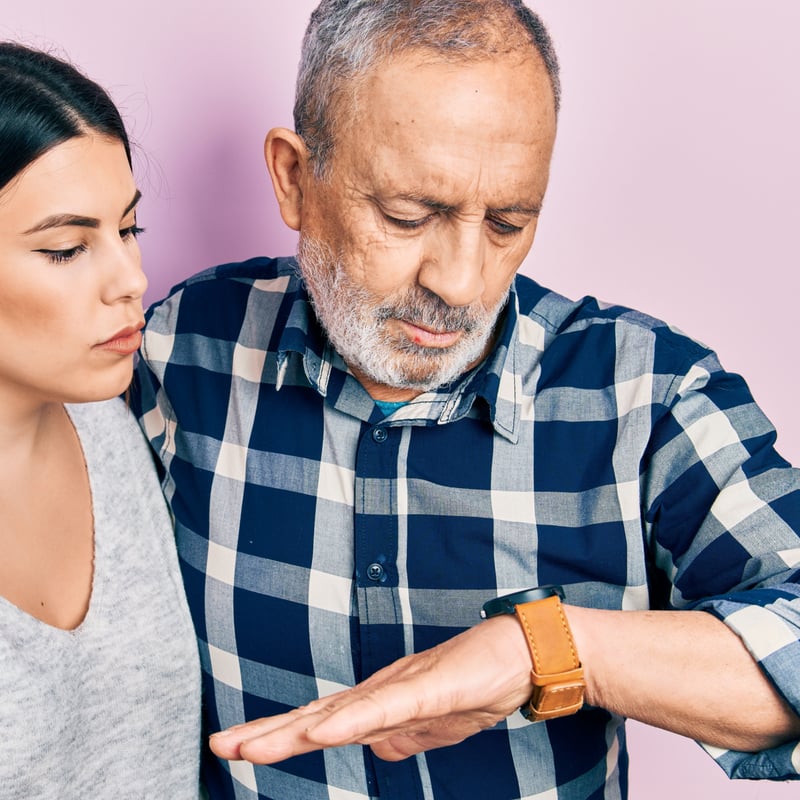
Pai: Tens relógio?
{{Dad: Do you have a watch?}}
5
00:00:07,810 –> 00:00:08,630
Filha: O quê?
{{Daughter: What?}}
6
00:00:08,630 –> 00:00:11,310
Pai: Tens relógio?
{{Dad: Do you have a watch?}}
7
00:00:11,310 –> 00:00:13,770
Filha: Uh… sim, tenho.
{{Daughter: Uh… Yes, I do.}}
8
00:00:13,770 –> 00:00:15,510
Pai: Que horas são?
{{Dad: What time is it?}}
9
00:00:15,510 –> 00:00:18,460
Filha: São…. dezasseis e trinta.
{{Daughter: It’s…. 16:30. (4:30p.m.)}}
10
00:00:18,460 –> 00:00:19,900
Pai: …
{{Dad: (clears throat)}}
11
00:00:19,900 –> 00:00:23,480
Filha: Ah… Desculpa, estou atrasada.
{{Daughter: Ah… Sorry, I’m late.}}
12
00:00:23,480 –> 00:00:26,710
Pai: Estás sempre atrasada.
{{Dad: You’re always late.}}
13
00:00:26,710 –> 00:00:30,050
Filha: Pois, pois… desculpa.
{{Daughter: Yeah, yeah… sorry.}}
14
00:00:30,050 –> 00:00:32,270
Mas ainda temos tempo.
{{But we still have time.}}
15
00:00:32,270 –> 00:00:34,570
Pai: Sabes que gosto de chegar cedo.
{{Dad: You know I like to arrive early.}}
16
00:00:34,570 –> 00:00:38,100
Filha: Bem, hoje não vamos chegar cedo.
{{Daughter: Well, we aren’t going to arrive early today.}}
17
00:00:38,100 –> 00:00:40,400
Vamos chegar a horas.
{{We’re going to arrive on time.}}
18
00:00:40,400 –> 00:00:42,200
Pai: A que horas começa o filme?
{{Dad: What time does the movie start?}}
19
00:00:42,200 –> 00:00:45,280
Filha: O filme começa às dezassete.
{{Daughter: The movie starts at 17:00. (5p.m.)}}
20
00:00:45,280 –> 00:00:48,060
Ainda temos trinta minutos.
{{We still have 30 minutes.}}
21
00:00:48,060 –> 00:00:49,430
Pai: Não é muito tempo.
{{Dad: That’s not much time.}}
22
00:00:49,430 –> 00:00:50,700
Vamos amanhã.
{{Let’s go tomorrow.}}
23
00:00:50,700 –> 00:00:52,830
A que horas é o filme amanhã?
{{What time is the movie tomorrow?}}
24
00:00:52,830 –> 00:00:57,150
Filha: Não, pai. Hoje é o último dia.
{{Daughter: No, Dad. Today is the last day.}}
25
00:00:57,150 –> 00:00:59,000
Temos de ir hoje.
{{We have to go today.}}
26
00:00:59,000 –> 00:01:04,180
São só vinte minutos de carro. Temos tempo.
{{It’s only 20 minutes by car. We have time.}}
27
00:01:04,180 –> 00:01:05,830
Pai: Está bem, está bem…
{{Father: Okay, okay…}}
28
00:01:05,830 –> 00:01:07,790
Quanto tempo dura o filme?
{{How long does the movie last?}}
29
00:01:07,790 –> 00:01:11,920
Filha: O filme é das dezassete às vinte.
{{Daughter: The movie is from 17:00 to 20:00. (5-8p.m.)}}
30
00:01:11,920 –> 00:01:14,470
Pai: Das dezassete às vinte?
{{Father: From 17:00 to 20:00?}}
31
00:01:14,470 –> 00:01:16,550
Dura três horas?
{{It lasts 3 hours?}}
32
00:01:16,550 –> 00:01:19,410
Mas eu tenho uma consulta às oito e um quarto!
{{But I have an appointment at a quarter past 8! (8:15)}}
33
00:01:19,410 –> 00:01:24,030
Filha: Tens uma consulta às vinte e quinze da noite?
{{Daughter: You have an appointment at 20:15 in the evening? (8:15p.m.)}}
34
00:01:24,030 –> 00:01:25,600
Pai: Sim, tenho.
{{Dad: Yes, I do.}}
35
00:01:25,600 –> 00:01:26,670
Filha: Onde?
{{Daughter: Where?}}
36
00:01:26,670 –> 00:01:27,880
Pai: No médico.
{{Dad: At the doctor.}}
37
00:01:27,880 –> 00:01:29,770
Filha: No médico?
{{Daughter: At the doctor?}}
38
00:01:29,770 –> 00:01:33,390
É tarde para uma consulta médica…
{{It’s late for a doctor’s appointment….}}
39
00:01:33,390 –> 00:01:34,720
Tens a certeza?
{{Are you sure? (“Do you have the certainty?”)}}
40
00:01:34,720 –> 00:01:37,380
Pai: Sim, tenho a certeza!
{{Dad: Yes, I’m sure! (“I have the certainty”)}}
41
00:01:37,380 –> 00:01:39,520
Filha: Podes ver no calendário?
{{Daughter: Can you check the calendar?}}
42
00:01:39,520 –> 00:01:44,180
Normalmente, o médico só está aberto até às seis.
{{Usually the doctor is only open until 6.}}
43
00:01:44,180 –> 00:01:46,650
Pai: Está bem, eu vou ver.
{{Dad: Okay, I’ll go check.}}
44
00:01:46,650 –> 00:01:50,860
Ah… A consulta é às oito e quinze, sim.
{{Ah… The appointment is at 8:15, yes.}}
45
00:01:50,860 –> 00:01:53,470
Mas não é às oito e quinze da noite.
{{But it’s not at 8:15 in the evening.}}
46
00:01:53,470 –> 00:01:56,040
É às oito e quinze da manhã.
{{It’s at 8:15 in the morning.}}
47
00:01:56,040 –> 00:01:57,140
Filha: Hoje?
{{Daughter: Today?}}
48
00:01:57,140 –> 00:01:59,060
Pai: Não, é amanhã.
{{Father: No, it’s tomorrow.}}
49
00:01:59,060 –> 00:02:03,560
Filha: Está bem. É amanhã de manhã. Então está tudo bem.
{{Daughter: Okay. It’s tomorrow morning. Then everything’s fine.}}
50
00:02:03,560 –> 00:02:06,680
Pai: Está bem, ótimo. Vamos ver o filme.
{{Father: Okay, great. Let’s go see the movie.}}
51
00:02:06,680 –> 00:02:09,390
Filha: Tenho de ir à casa de banho primeiro.
{{Daughter: I have to go to the bathroom first.}}
52
00:02:09,390 –> 00:02:10,900
Pai: Que horas são?
{{Dad: What time is it?}}
53
00:02:10,900 –> 00:02:13,810
Filha: São dezasseis e trinta e quatro.
{{Daughter: It’s 16:34. (4:34p.m.)}}
54
00:02:13,810 –> 00:02:15,150
Pai: Não temos tempo!
{{Dad: We don’t have time!}}
55
00:02:15,150 –> 00:02:17,250
Vamos! Vamos embora!
{{Let’s go! Let’s go!}}
56
00:02:17,250 –> 00:02:19,060
Entra no carro, filha!
{{Get in the car, daughter!}}
57
00:02:19,060 –> 00:02:20,950
Filha: Está bem, está bem!
{{Daughter: Okay, okay!}}
58
00:02:20,950 –> 00:02:23,070
Tem calma, pai!
{{Take it easy (“have calm”), Dad!}}
59
00:02:23,070 –> 00:02:27,220
PracticePortuguese.com
 Eliana
 Rui
Rui






Comments
Hi,
When we say from 17:00 to 20:00 – Das dezassete às vinte.
Should we use the accent above the a? I was thinking this accent is used when you say “the film starts at 17:00 – O filme começa às dezassete”.
I’m asking because during the previous lessons when it was a time frame there wasn’t an accent above the a.
Thanks!
Olá! Yes, when we’re indicating time periods in contexts like these, we must always use “à” or “às”. Could you share any examples of previous instances where you think the accent was missing?
Same unit – lesson 3:
A nossa pausa para almoço é entre o meio-dia e as 2h
Ah, yes, that’s the inevitable exception that I forgot, sorry. When we use “entre… e…” (between… and…), we do not use any additional prepositions, and no accent is added (the accent indicates a contraction between the preposition ‘a’ + definite article ‘a’ or ‘as’). Contractions, and the consequential accent when applicable, are required when we use “de… a…” (from… to…) or when we use “a…” alone (at).
Compare all these versions of that same example:
– A pausa é entre o meio-dia e as duas
– A pausa é do meio-dia às duas
– A pausa é ao meio-dia
– A pausa acaba às duas
Is it also an exception when you say quinze para as nove or all the times before the hour please?
Olá! As noted in my previous message, contractions will apply whenever you need to use the preposition “a” in addition to the definite article “a”. Your example isn’t quite an exception – it’s just that instead of the preposition “a”, those sentences require the preposition “para”, and that one doesn’t contract. So, we always write “…para as”. “Para às” is grammatically incorrect.
Just want to say this shortie was perfect for me and fit perfectly with this A1 level.
Obrigado!