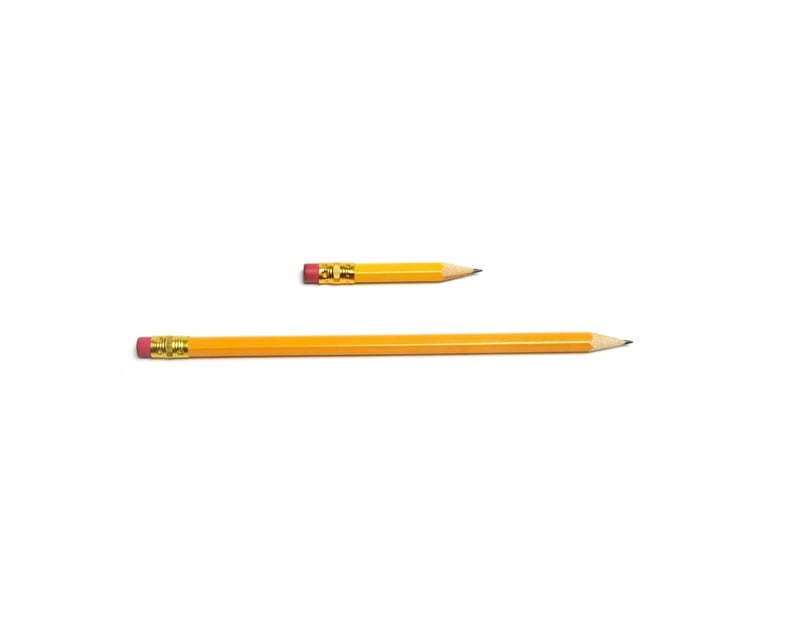
What do cooking, taking a trip, shopping for clothing, and building or furnishing a home have in common? They all involve different types of measurements. To prepare you to discuss sizes and measurements in Portuguese, we’ll cover some basic Portuguese vocabulary related to length, width, height, weight, distance, and so on. Here are a few simple terms to get you started:
- baixoshort & altotall
- magrothin, lean, skinny & gordofat
- grandelarge & pequenosmall


Clothing Size
When shopping for clothing, you need to know o tamanhothe size . (Or in the case of shoes, o númerothe number ). Otherwise, you may pick something that is too largowide, broad or apertadotight .
Justotight, fair also means tight, but it usually refers to something that is supposed to be tight, like a slim-fitting dress, for example. It’s like saying the clothing fits snugly / just right, whereas apertado generally implies that something is too tight.
If you go to a alfaiatetailor , you can get something made à medidacustom, tailored, tailor-made .
Units of Measurement
Like most of the world, Portugal uses the metric system.
When measuring a largurathe width , a alturathe height, altitude , or the comprimentolength of something that is curtoshort , we may use os milímetrosmillimeters or os centímetroscentimeters . For something mais comprido / mais longo, we may use os metrosmeters or os quilómetroskilometers .
There are 10 milímetros in a centímetro, 100 centímetros in a metro, and 1000 metros in a quilómetro. You may talk about metros quadradossquare meters when discussing the size of a home or a room.
When it comes to pesoweight , there are 1000 gramasgrams in a quilogramakilogram . As for volume, there are 1000 mililitros in a litro.
This should cover the most common measurements you may use on a daily basis.
Numbers are obviously quite important when talking about as medidasmeasurements , so you may want to bookmark these Units to check out later, if you haven’t yet: Numbers 1 | Numbers 2 | Numbers 3
Comprido vs Longo in Portuguese
When talking about length or distance in Portuguese, you’ll probably come across these three Portuguese adjectives:
curtoshort
longolong
compridolong
What’s the difference between comprido vs longo? They both mean long, but they tend to be used in different contexts. As this is a common point of confusion, we’ll take a closer look at each one below.
Longo
Due to the similarity to the English word long, you may be tempted to always use this one. However, we primarily use longolong to qualify distances or periods of time.
Não faço planos a longo-prazoI don't make long-term plans
Foi uma longa reuniãoIt was a long meeting
A distância é longa até MadridIt's a long distance to Madrid
An exception would be when talking about sentences/texts: Eu escrevo textos longosI write lengthy texts
Comprido
CompridoLong is used more often when referring to body parts, clothing, and other relatively small, tangible things such as beds, couches, wires, among others.
Eles têm cabelo compridoThey have long hair
Os meus braços são compridosMy arms are long
As mangas estão demasiado compridasThe sleeves are too long
Usei o lápis mais compridoI used the longer pencil
Quero um tapete comprido para a salaI want a long carpet for the living room
Be aware of the similarity with the word cumpridoaccomplished, achieved . They sound almost the same, but have very different meanings.
Despite the aforementioned differences between comprido vs longo, they do have some overlap in meaning and use. Longo, in particular, can sometimes replace comprido in certain contexts (such as describing body parts). However, the other way around (comprido replacing longo) doesn’t usually work as well and can be more jarring to a native speaker.
Curto
As mentioned before, curtoshort is the opposite of the two adjectives above. You can use it whether you’re talking about distances, time, or objects. Let’s see a few examples:
Tivemos um curto debateWe had a short debate
A distância é curtaThe distance is short
Eles têm o cabelo curtoThey have short hair
Gender & Number Agreement
Since many (but not all) of the words in this Unit are adjectives, here’s a quick reminder to adjust the adjectives to match the noun they describe in gender and number. You probably noticed many examples above, such as comprido / compridos / comprida / compridas.
Comments
Please give more examples for measurement of objects and what you mean by body attributes.
Hello Richard!
By body attributes, we actually meant body parts – that was a mistake, so thank you for pointing it out. We’ve also updated the Learning Note to make things clearer and added 2 examples as well.
This is a bit confusing, as it doesn’t follow any particular rules, so let us know if you need any help with this subject.
In my mind, I’m thinking that “longo” is reserved for things that are properly measurable rather than just perceived as relatively “long” — is that right?
(I’ve only just reached this lesson, so may have got the wrong end of the stick here)
And maybe also “long” in an abstract sense??????
I have just learned that “comprido/a” has nothing to do with “comprar”!
Hello Alison!
I’m going to reply to both your comments here.
“Comprido” has nothing to do with the verb “comprar”. However, “comprado” – past participle of “comprar” does. One simple letter can make a lot of difference.
Now, the short answer to your question is: well, no. The long answer is a bit more complicated.
Both “longo” and “comprido” have the same origin, they’re synonyms and can be often used interchangeably. In some situations, though, we refrain from using one or the other. How do people know which one is better? First, “comprido” is more commonly used with tangible things, «things that are properly measurable» to use your own words. Second, there’s also the way it sounds when you say it. Let me give you 2 examples:
“Que dia tão comprido!” / “Que dia tão longo!” (“What a long day!”)
“É uma distância comprida até à Lua.” / “É uma longa distância até à Lua.” (“It’s a long distance to the moon.”)
All 4 are fine and have the same meaning. However, the ones with “longo” sound a little bit better to our ears, especially the moon one. It’s something that eventually becomes intuitive, the more you hear it.
Did that clear your confusion? Let me know! 🙂
I’m also going to correct the article as I’ve noticed the word “relatively” might cause some confusion.
Yes, that’s amazingly helpful — thanks so much for the added explanation, Eduardo!
Hi,
Can we can also say: “A distancia ate Madrid e longa” and “Tivemos um debate curto” ?
Olá, Stein. Yes, either way is absolutely fine for both sentences 🙂
Muito obrigado
Does the position, before or after the noun, alter the interpretation?
Olá, Mudan. Not with these adjectives 🙂 The order doesn’t make a difference here.
Olá!
Quando dizem que usam “comprido” com coisas relativamente pequenas como “wire”. Qual seria a tradução para português?
Fio? Cabo?
Olá, Maria! “Wire” pode ser traduzido das duas formas; depende. Por exemplo, “cabo de eletricidade” (electrical wire), “fio de pesca” (fishing wire/fishing line), etc.
Olá. Uma pregunta um pouco técnica… Nos exemplos da lição, porque é que se usam ‘são’ e ‘éstão’ assim:
“No inverno, as noites são longas”
“As calças estão curtas”
Certamente as noites mudam e a medida das calças não, então porque não se usam assim:
“No inverno, as noites estão longas”
“As calças são curtas”
Olá, Claudine. A escolha entre o verbo ser e estar nem sempre depende de algo ser permanente ou temporário. Às vezes, segue outras regras – ou nenhuma! Nos dois casos que indicaste, em vez de pensarmos em permanente vs. temporário, podemos pensar em padrão vs. não-padrão. No inverno, é normal (padrão) que as noites sejam longas, e nessa lógica, o verbo ser é uma boa escolha. No caso das calças, queremos dizer que elas estão curtas demais, o que é algo inesperado ou indesejado (não-padrão); o verbo estar reflete isso mais claramente.
Então, posso dizer “as calças são curtas” se não quero dizer que eles estão “curtas demais”? Por exemplo: “Tenho muitas calças. Estas calças são curtas, estas calças são compridas”.
Sim, o verbo ‘ser’ ajuda a mostrar que as calças são curtas por escolha de design e não por serem do tamanho errado 🙂
Obrigada!
Ah, bom! Faz sentido e entendo agora. Muito obrigada pela explicação tão abrangente e clara.
Hi there
I can’t figure out when the adjective of measurement goes before and when it goes after the noun.
eg: um longo caminho
uma vida curta
I see in answer to one of the comments above, you say the order doesn’t make any difference. So in both these examples the order of adjective and noun could be reversed?
Thanks.
Olá. Yes, for these particular adjectives, the order could be reversed and you’d still have correct sentences with the same meaning:
– Um longo caminho = Um caminho longo
– Uma vida curta = Uma curta vida
This is not the case for all adjectives in general, since some do have a preferential order. It can also happen that adjectives have different interpretations in each case (more literal if after the noun, and more subjective if before the noun).
Why is estar used with mangas compridas (instead of ser)? Does this imply that you could change/shorten the sleeves by pushing them up?
Olá, podia explicar “colocação de adjectivo”?? Às vezes o adjectivo antes de substantivo, Como: “Tivemos um curto debate”, por vezes o adjectivo depois de substantivo “Eles têm o cabelo curto.”
Olá! Em geral, os adjetivos são flexíveis e podem ser colocados tanto antes como depois dos substantivos. Na maioria dos casos, mudar a posição não muda o sentido da frase, mas para alguns adjetivos, há uma ligeira diferença no significado (mais literal depois do substantivo, mais subjetivo antes do substantivo). Esta Learning Note explica em maior detalhe: Introduction to Portuguese Adjectives | Practice Portuguese
HI in the exercises there is both “o dia é longo” and “no verao, os dias sao mais compridos” Is this another case of “both are right but one sounds better than the others? (and apologies or the lack of diacritical characters)
Olá! Good question. The short answer is that both are right and neither sounds necessarily better. For a longer answer, I would add that the main difference between ‘comprido’ and ‘longo’ is that ‘comprido’ generally works better on a smaller scale, and that’s why it lends itself well to body parts, small everyday objects, and even shorter distances and periods of time, eventually overlapping with ‘longo’ there (as you saw, a day may be called both ‘comprido’ and ‘longo’, but a year is preferably ‘longo’). The use of ‘longo’ in these small-scale contexts is often meant to emphasize our perception that the thing at hand is indeed pretty long 🙂
Hi,
The exercise in this unit said, As calças estão curtas. Why not são? They are not temporarily short obviously.
Thank you,
Dan
Olá 🙂 Both verbs can be used, but there is a difference in meaning between them:
– The verb estar (as calças estão curtas) makes it clear that the pants don’t fit you properly – them being short is not actually how they’re supposed to look. You could be trying them on for the first time and just realizing this, or maybe you already had them, but they shrunk after washing, or maybe you grew taller, etc.
– The verb ser (as calças são curtas) is more general. You could be talking about pants that are the wrong size for you, but you could also just be plainly describing a type of pants that are supposed to look a bit short by design.
So, the temporary vs. permanent rule of thumb doesn’t apply here and there are other considerations to make to distinguish between each verb.