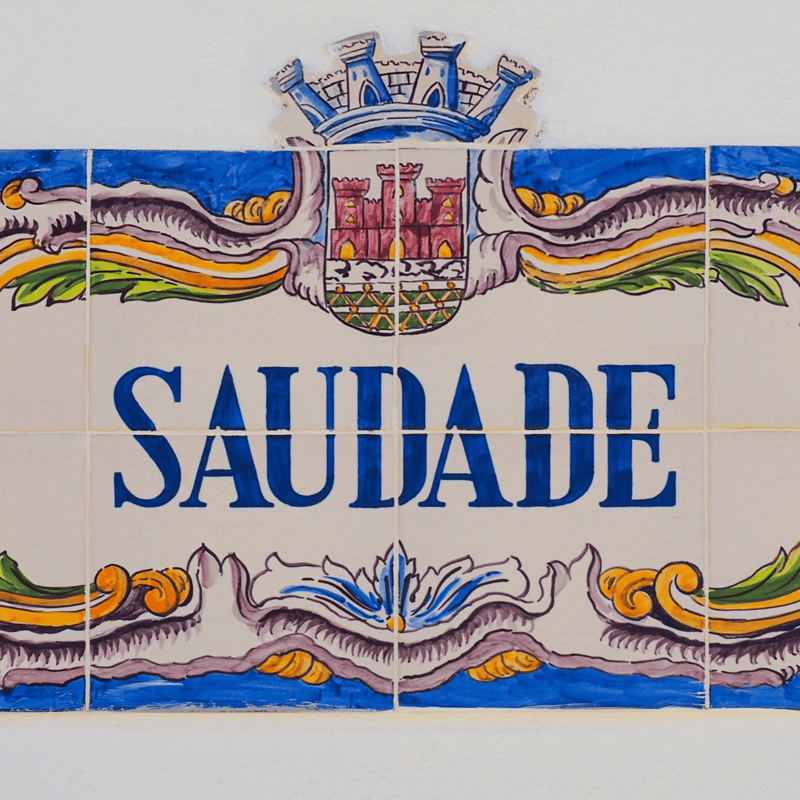
You know that warm, heavy feeling you get looking at old photos? Not just sadness, but also something tender and aching at the same time. The Portuguese have a word for that: saudade .
It’s a feeling that sits somewhere between missing, longing, and nostalgia. That bittersweet quality is what makes it distinct: the longing is tinged with warmth, even love. It’s not just “I miss this.” It’s closer to “I carry this with me, and it hurts beautifully.”
Saudade can be a more profound feeling, like grief, loss, or heartache. But it also comes up in everyday life, like when greeting a friend you haven’t seen in a while, or talking about your hometown.
Nowhere is saudade more at home than in o fado , the haunting music genre that has been sung in Portugal since the early 1800s. While the word is much older, many trace its cultural significance to the Age of Discovery, when sailors and the families they left behind shared the same ache: an ocean between them and no certainty of return.
How to say you miss someone (or something)
The go-to structure is ter saudades de + the person or thing you miss.
- Tenho saudades da praiaI miss the beach
- Ela tem saudades dos amigosShe misses her friends
- Tenho saudades de ti


With people, you can also use a possessive word instead of de + pronoun. The possessive agrees with saudades, so it takes the feminine plural form:
- Tenho saudades tuasI miss you (sing.,inf.)
- Tenho saudades suasI miss you (sing.,formal)
- Os meus avós têm saudades minhasMy grandparents miss me
Saudade or saudades?
Both, but people in Portugal default to the plural form in most everyday expressions and exclamations, whether they’re greeting someone or reminiscing. And no, it doesn’t mean they miss several things:
- Que saudades!I’ve missed you!, So good to see you!
- Olha esta foto! Que saudades!Look at this photo! Those were the days!
- Que saudades do verão!I miss summer so much!
- Que saudades que eu tenho de ti!I miss you so much! (Lit. “What saudades I have of you!”)
You may hear the singular too (Que saudade!, Que saudade que eu tenho da minha terra!, etc.), just less often in Portugal. It is mostly used to refer to the feeling itself, the one fado songs and poems are full of:
- A saudade é um sentimento muito portuguêsSaudade is a very Portuguese feeling
“Killing saudades” and other verb pairings
Besides ter, you’ll also hear saudades with a handful of other verbs. For example:
- Sinto saudades da minha avóI miss my grandmother – Sentir (to feel) works the same way as ter here
- Estou cheio de saudades tuasI miss you so much (Lit. I’m full of saudades for you) – A woman would replace cheio with cheia.
- Estou a morrer de saudades de casaI’m desperately missing home (Lit. I’m dying of saudades for home)
- Vamos beber um copo para matar saudadesLet’s have a drink and catch up (Lit. ...to kill the saudades)
- Manda saudades à tua mãeSay hi to your mom for me (Lit. Send saudades…)
- Ela deixou saudadesShe is greatly missed (Lit. She left saudades) – You can say this about someone who died, but also about a colleague who changed jobs.
- Esta música dá-me saudades do verãoThis song makes me miss summer (Lit. “…gives me saudades”)
Alternatives
To say you miss a person or thing without the full emotional weight of saudades, use fazer falta or sentir a falta de. With fazer falta, the person or thing you miss becomes the subject of the sentence, a bit like saying “you are lacking to me”:
- Fazes-me faltaI miss you (Lit. You are lacking to me)
- Senti a tua faltaI missed you (Lit. I felt your absence)
- Sinto falta do solI miss the sun (Lit. I feel the lack of the sun)
- Faz-me falta um carroI could use a car (Lit. A car is lacking to me) – Fazer falta also works for things you need, not just things you miss.
Missed the bus? That’s not saudades
For missing a bus, a class, or a chance, use perder instead:
- Perdi o autocarroI missed the bus
- Perdi a aula de ontemI missed yesterday’s class
Careful with Perdi-te. It means “I lost you”, as losing sight of someone in a crowd, not “I missed you”.
How to reply
If someone says they miss you, here are a few ways you could reply:
- Também tenho saudades tuasI miss you too
- Eu tambémMe too
- Então, quando é que matamos saudades?So, when are we catching up?
If they used de ti, as in Tenho saudades de ti, you can also answer E eu de ti (Lit. “And I of you”), meaning “Me too.”
If they used fazer falta, keep the same structure in your reply:
- Tu também me fazes falta
- Or simply: E tu a mim (Lit. “And you to me”)
Related words
Saudoso is an adjective (a word that describes a noun) meaning “missed” or “fondly remembered”. Before a person’s name, it refers to someone who has died.
- o saudoso Eusébiothe late, great Eusébio
- os saudosos tempos da escolathe good old school days
Saudosista describes someone who looks back on the past and wishes it had never ended. It can sound critical, closer to “stuck in the past”, and in politics it can point to people nostalgic for the Estado Novo dictatorship.
- O meu avô é muito saudosistaMy grandfather is very nostalgic for the good old days
Saudosismo is the attitude itself:
- Isso é puro saudosismoThat’s just nostalgia talking (Lit. That is pure nostalgic attitude)